Galala University Student Wins Second Place in the Bishara Legacy Competition
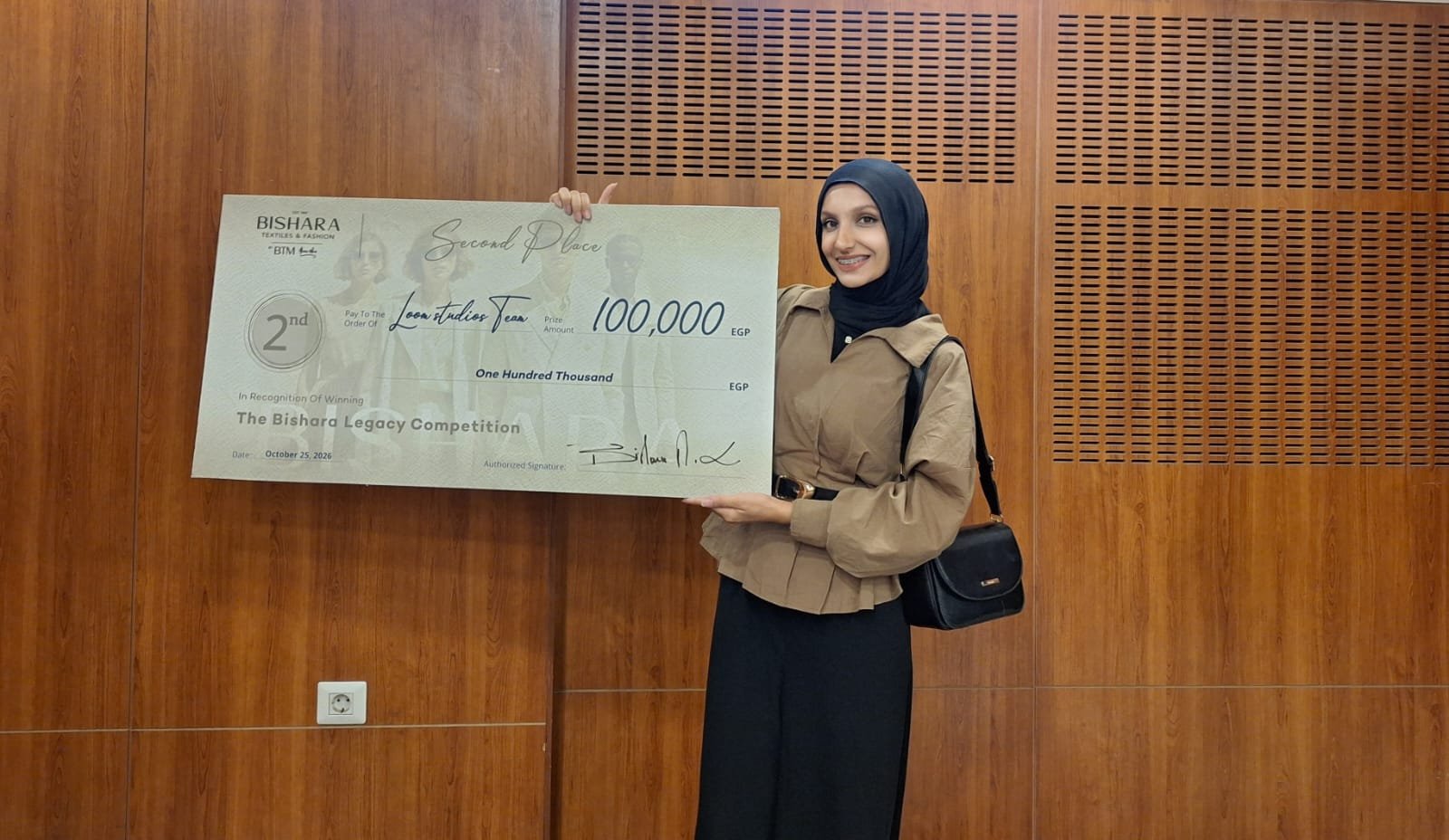
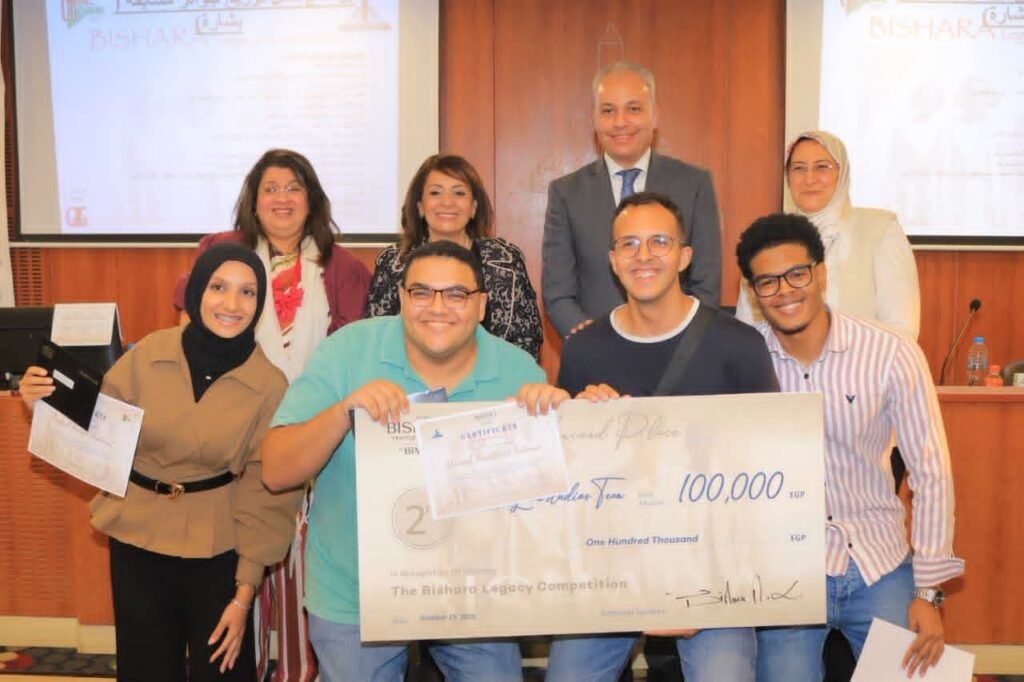
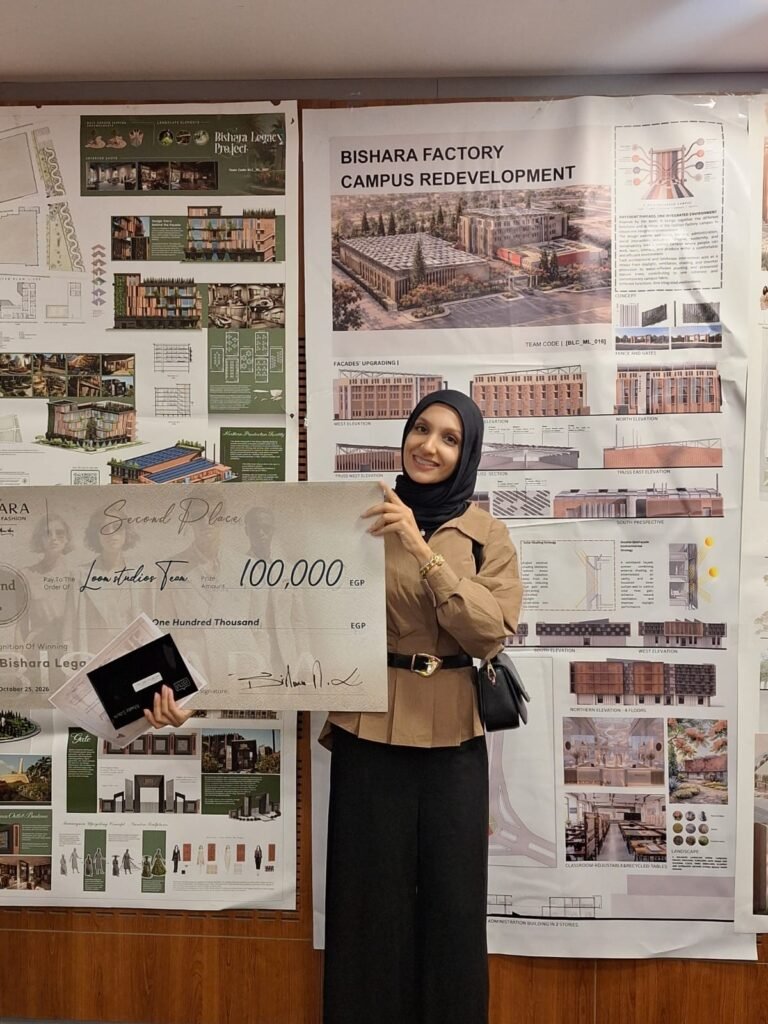
Raghad Ahmed Abdelaal, an Architecture student at Galala University and a member of *Loom Studio team*, achieved second place in the Bishara Legacy Competition, competing among 62 teams and over 400 students from 17 Egyptian universities, with 18 projects reaching the final evaluation.
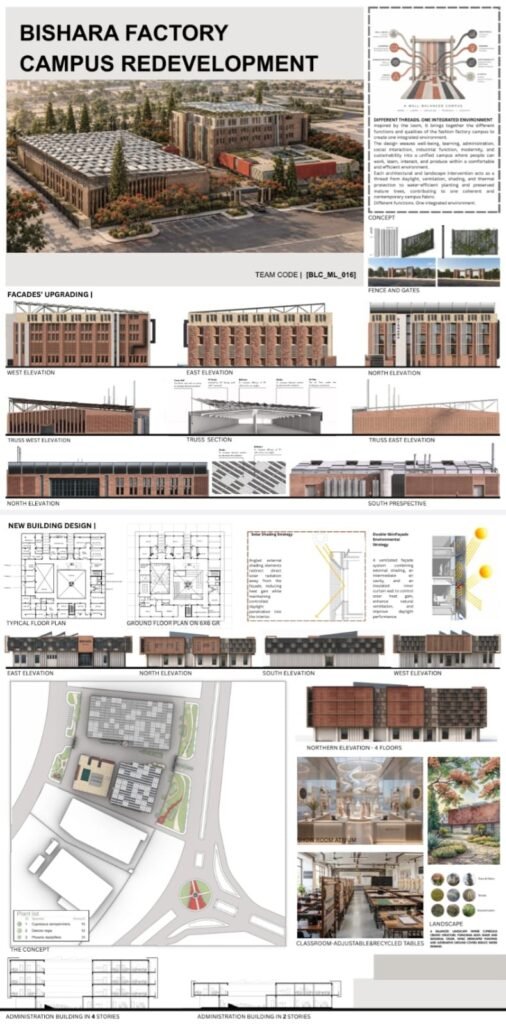
Organized by the Urban Design & Planning Department at Ain Shams University’s Faculty of Engineering, in collaboration with Bishara Textiles & Fashion Manufacturing, the competition challenged participants to redevelop the Bishara Factory campus in 10th of Ramadan City. The proposal integrated a new administrative headquarter building, a workers’ learning facility, a nursery, renovated façades and truss building, and a unified landscape extending to Bishara Square.
And selected design solutions from the proposal are planned for implementation on site at Bishara Factory.
LOOM STUDIO | Different Threads, One Integrated Environment
Our concept began with a site visit, where we identified the factory campus’s diverse challenges and developed a checklist of interventions to address them through one unified design language. Inspired by the loom, our team of four students from different universities, cities, and backgrounds reflects the same principle: bringing distinct threads together to create one meaningful, functional whole.
This vision shaped the redevelopment of Bishara Factory through a new administrative headquarter building integrating offices, educational facilities for workers, and attatched nursery for their children, alongside redesigned factory façades and a landscape extending to Bishara Square.
At the heart of the design is a campus-wide maximizing clean solar energy generation through campus rooftops, while carefully treating façades, windows, and openings to minimize unwanted solar heat gain. These strategies enhance natural lighting and thermal comfort, reduce electricity consumption, and create a more sustainable, energy efficient, and people- centered campus